
KEYNOTE SPEAKER: OWNER DEPENDENCY, LEADERSHIP AND ACCOUNTABILITY
What Happens to Your Business When You Can’t Be There?
In 2025, Dan Paulson was hospitalized twice in a matter of weeks, first for a brain bleed and then for a second medical crisis that followed. For months he could not travel or work at full capacity, and the business he had spent years building came to a stop because everything depended on one person. Dan had spent his career helping owners reduce their dependence on themselves. Now he had to rebuild his own company the same way. His keynotes turn that experience into a message every leadership audience needs before life tests them: a business that works only when you are present is at risk, and the habits that create that risk can be changed. Today Dan is fully recovered and back on the road, bringing that lesson to conferences, associations and leadership teams.

See Dan on Stage
This five-minute reel from a live HR and leadership conference shows Dan’s direct, conversational style and how he moves an audience from familiar frustration to a practical first change.
Runs about 5 minutes. Turn on captions with the CC button. Watch on YouTube
The Problems Are Familiar Because They Happen Every Day
Commitments fade
Everyone leaves the meeting in agreement, but the work does not consistently happen afterward.
Problems move upward
Employees and managers pass difficult decisions to the person most likely to step in and solve them.
Systems lose credibility
Procedures, dashboards, and training exist, but leaders do not reinforce the behavior required to use them.
Reliable leaders burn out
Owners and managers keep catching the work because they do not trust the problem to be handled at the right level.
Keynotes
SIGNATURE KEYNOTE
The Day I Couldn’t Show Up
What a brain bleed taught me about building a business that runs without you
Keynote · 45 or 60 minutes · Opening or closing general session
A headache that would not go away turned out to be a brain bleed, and within days Dan went from running his business to fighting for his health. A second crisis followed weeks later. The illness did not create a weakness in his business. It exposed one. Everything ran through him, so when he could not show up, sales stopped and the work stalled.
In this keynote Dan tells that story with candor and uses it to show how capable leaders unintentionally become the center of everything, why so many companies only work when the owner is in the building, and which behaviors and leadership habits keep it that way. Audiences leave moved by the story and clear on the first change to make before an emergency makes it for them. Based on Dan’s book, Escape the Owner’s Trap.
Audience takeaways
- Recognize the signs that a business, team or department depends too heavily on one leader
- Understand how everyday rescue behavior trains people to wait for the leader instead of acting
- Choose one leadership habit to change now, while the choice is still yours
KEYNOTE
Why Employees Don’t Follow Through
What leaders can change before adding another policy, meeting, or reminder
Keynote · 45 or 60 minutes · Also available as a breakout
Employees do not always miss commitments because they do not care. Follow-through often breaks when expectations remain open to interpretation, finished work is poorly defined, or managers reinforce the standard inconsistently. Dan helps audiences see where execution actually breaks down and where leaders can begin repairing it.
Audience takeaways
- Turn broad expectations into clear results people can act on
- Define ownership and finished work before a commitment is missed
- Reinforce standards in the flow of work instead of relying on repeated reminders
KEYNOTE
From Burnout to Buy In
Build accountability without pushing every problem up the chain
Keynote · 45 or 60 minutes · Also available as a breakout
Owners and managers burn out when they repeatedly catch work, correct the same issues, and make decisions that should be handled elsewhere. This session examines how rescue behavior creates dependence and how leaders can build ownership without adding layers of meetings, reports, and oversight.
Audience takeaways
- See how stepping in to help can condition people to move problems upward
- Place ownership with the person or level best equipped to handle the work
- Use systems to support better behavior after expectations and authority are clear
BREAKOUT OR WORKSHOP ADD-ON
Behavior First Systems Next
Why good tools fail when leadership behavior contradicts them
Booked alongside a keynote, this working session gives leaders time to apply the keynote’s ideas to their own systems. Many organizations already have procedures, checklists, dashboards, software, and training. The same problems return because the behavior around those systems has not changed. This session helps leaders examine what they demonstrate, tolerate, reinforce, and follow up on before they invest in another solution.
Audience takeaways
- Separate a system problem from a behavior and discipline problem
- Identify leadership actions that weaken otherwise useful processes
- Strengthen the systems that already work before adding more complexity
What Audiences Leave With
Dan’s sessions are designed to help people recognize the operating pattern behind a recurring problem and choose a practical first change. Depending on the topic and audience, participants will be better prepared to:
- Clarify the result instead of assuming everyone defines success the same way
- Put decisions and ownership at the level best suited to handle them
- Address behavior before adding another tool or process
- Reduce repeated follow-up, rescue work, and unnecessary escalation
- Use meaningful measures to see whether the improvement holds under pressure

Where Dan Delivers Keynotes
Conferences and associations
Opening and closing keynotes for owners, executives, managers, HR leaders and operating teams.
Company leadership meetings
Keynotes for annual meetings, leadership summits and kickoffs focused on accountability, execution and decision ownership.
Executive retreats
A keynote followed by a facilitated discussion on where work, decisions and exceptions continue to move upward.
Keynote plus workshop
Pair the keynote with a breakout or half-day workshop so participants apply the ideas to a current operating problem.
Experience Behind the Message
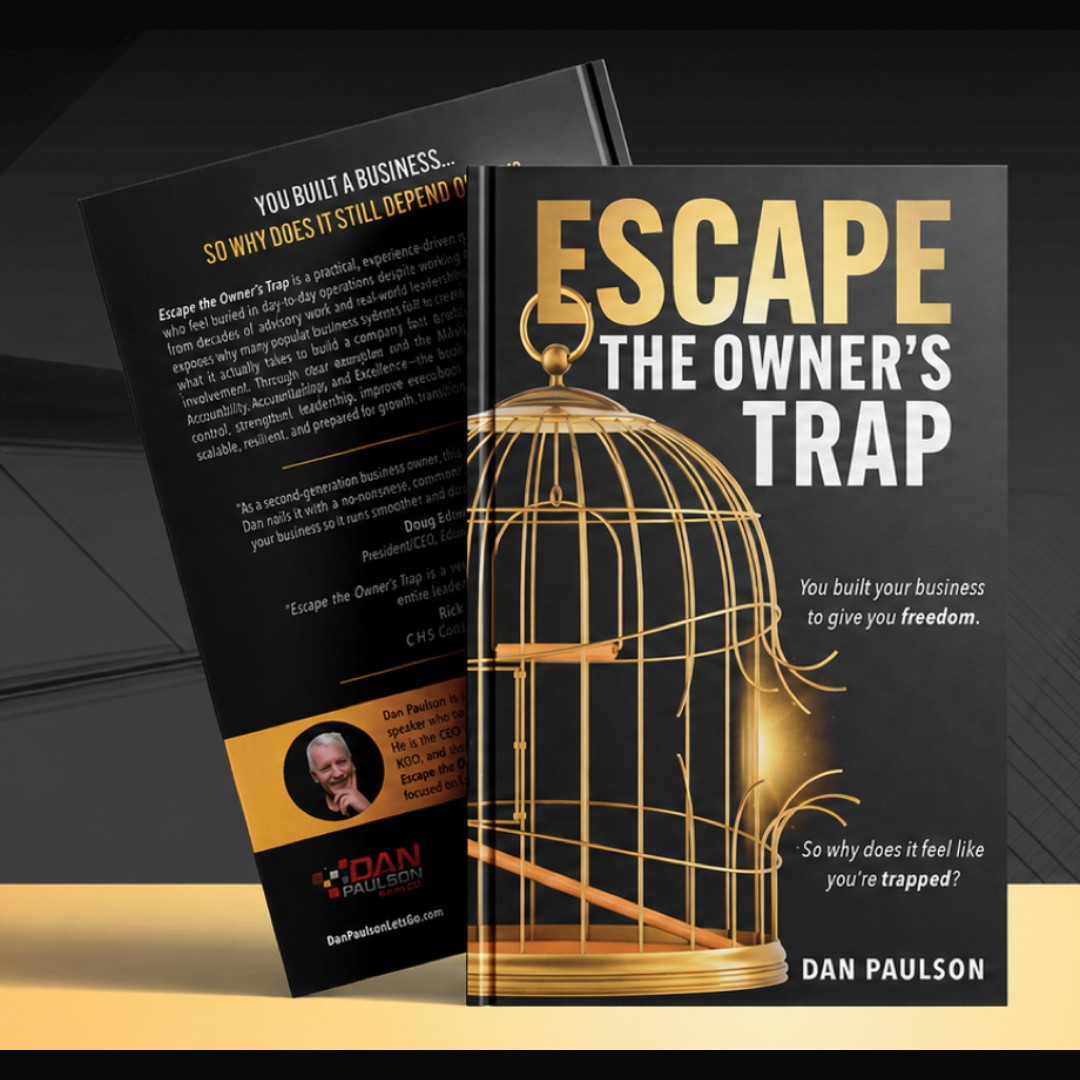
Dan Paulson is a keynote speaker, Owner Dependency Advisor, creator of the MAAX System and author of Escape the Owner’s Trap. He works with owners and leadership teams that have capable people and established systems but still depend too heavily on one person to maintain decisions, accountability, and results.
Dan’s message is personal. After a 2025 brain bleed and a second medical crisis left him unable to travel for three months, he rebuilt his own business using the principles he teaches, built repeatable systems around them and began developing a team to help other owners do the same.
His speaking brings that operating experience into the room. Dan uses recognizable business situations, direct questions, and practical examples to help audiences see why performance breaks down and where leaders can begin changing it.
Dan has delivered keynotes and presentations for professional associations, chambers of commerce and corporate events, including the Wisconsin Health Information Management Association (WHIMA).
An Original Point of View Grounded in Real Business Work
Escape the Owner’s Trap explains why successful companies become dependent on their owners. The MAAX System provides the behavior-first method Dan uses to examine leadership, measurable performance, accountability, and the standard of eXcellence the organization must protect.
These ideas give Dan’s presentations a consistent foundation while allowing the examples and emphasis to fit the audience.
Information for Event Planners
Keynote Fees
Keynote fees start at $10,000 plus travel. The final fee depends on format, length, location and whether the keynote is paired with a breakout or workshop. Share your date, audience and budget on the inquiry form, and Dan will confirm availability and a fee for your event.
A complete speaker kit is being prepared. It will include:
- Short, medium, and full biography
- High-resolution headshots and live-event photographs
- Current talk descriptions and audience takeaways
- Approved stage introduction
- Speaker reel and captioned video link
- Book cover and MAAX logo files
- Audio and visual requirements
- Booking contact information
Need something now? Send an inquiry and Dan will provide what your event requires.
Frequently Asked Questions
Dan’s material is most relevant to business owners, executives, successors, managers, HR leaders, and operating teams responsible for accountability and results. The examples are especially familiar to established construction, manufacturing, skilled-trades, family-owned, and operationally complex organizations.
Yes. The planning conversation identifies the audience, event goals, current concerns, and examples that will make the material most useful. Dan keeps the core ideas intact while adjusting the emphasis and application.
Yes. Private leadership meetings, executive retreats, and company workshops can focus the discussion on the organization’s current accountability, follow-through, leadership, or owner-dependency concerns.
Keynote fees start at $10,000 plus travel. The final fee depends on format, length, location and any added breakout or workshop. The inquiry form asks for your budget range so Dan can respond with a specific proposal.
Dan’s keynotes are paid engagements. If your group does not have a speaker budget, the free Owner Dependency Scorecard and Escape the Owner’s Trap are good ways to bring his ideas to your members.
Dan will review the event details and follow up to discuss fit, goals, format, timing, and next steps. Submitting the form does not create a booking obligation.
Book a Keynote for Your Next Event
Tell Dan about your event, who will be in the room and what you want the audience to do differently afterward. He reviews every inquiry and follows up to confirm fit, format and fee.
Check Keynote Availability